Bridging the gap between dream and practice.
I combine qualitative, quantitative, participatory, and design-led research to understand not only what people say, like, and do, but what solutions their behavior makes possible through making and experimentation. My research practice expands traditional inquiry by using craft, prototyping, testing, observation, and iteration to bridge the gap between private, civic, and community-held institutions and their users’ needs.
-
I am a design researcher working at the intersection of human behavior, material experimentation, and systems change. My work investigates how people experience, value, and adopt new ideas, particularly those that challenge existing assumptions about products, materials, food, and the systems surrounding them. I move fluidly between researcher, designer, and maker, using each perspective to ask different questions and uncover new possibilities.
-
My research combines qualitative, quantitative, participatory, and design-led methods to move from understanding to experimentation. I use interviews, surveys, systems mapping, co-design, statistical analysis, and observational research alongside prototyping, material exploration, and testing. Rather than treating making as something that follows research, I use it as a method of inquiry, creating tangible ways to test assumptions, surface knowledge, and investigate what could be.
-
I work across disciplines and sectors with communities, public agencies, researchers, designers, makers, educators, businesses, and subject-matter experts. I am especially drawn to collaborations where no single discipline holds the answer and where bringing together lived experience, technical knowledge, research, and creative practice can reveal possibilities for systemic innovation.
Desirability & Regenerative Innovation
Consumer research · Sensory evaluation · DCE · WTP · Material experimentation
Human-Centered Systems & Social Innovation
Interviews · Co-design · Stakeholder mapping · Surveys · Systems mapping
Making, Craft, & Design Knowledge
Research through design · Prototyping as inquiry · Material experimentation
Ways of knowing
Semi-structured interviews, stakeholder interviews, ethnographic research, contextual inquiry, co-design workshops, participatory research
Stakeholder mapping, power mapping, journey mapping, systems mapping, literature & precedent reviews, landscape analysis
Survey design, statistical modeling (R), NLP/text analysis, sentiment analysis, topic modeling, network analysis (Python)
Publications
Hadjiyanni, T., Davies, K., & Akers, Q. (2023). Infusing Mental Health in Design Education: A Case Study on Transdisciplinarity and Empathy as Mediums for Innovation. Interdisciplinary Journal of Partnership Studies, 10(2), Article 5. https://doi.org/10.24926/ijps.v10i2.5495
Applied research projects
-
Methods: digital surveys, public outreach, data analytics, empirical field research (compositional analysis)
In May 2025, Hennepin County released its Wasted Food Prevention Plan, outlining an ambitious target to cut discarded edible food from both the residential and commercial sectors in half. According to the literature, schools represent a strategic leverage point in waste reduction and organics recovery. In 2019, an estimated 4.9 billion lunches and 2.5 billion breakfasts were served, and nearly one-third of all whole produce and fresh milk were thrown out in the United States. To address this, Hennepin County launched a two-part research effort to benchmark existing practices in school cafeterias against ideal waste prevention standards across literature. Results of the research effort would serve as a starting point for upholding similar standards in the county to effectively transition the county school system to a zero-waste future.
To help Hennepin County establish evidence-based standards for preventing food waste in K–12 schools, I translated national best-practice research into a stakeholder-driven study spanning 384 public, private, and charter schools. Working with county experts, I used power mapping to identify three groups with complementary influence over school food systems (district administrators, food service managers, and custodial leads) and developed tailored questionnaires to understand both policy-level decisions and the realities of cafeteria implementation. Following expert validation and stakeholder piloting, I led a three-month, multi-channel outreach strategy to assess current practices and identify opportunities to strengthen food waste prevention across the county.
-
Methods: Participatory Action Research (PAR), service design, co-design, grounded theory.
Launched in 2022, the GroundBreak Coalition, a Minneapolis-based initiative of over 40 private, public, and philanthropic partners, seeks to mobilize a systemic capital shift and build Black wealth. Today, the GroundBreak Coalition is slated to scale its model and direct $5B in community investment by 2034. The significant efforts of the collectively-owned strategy to revolutionize wealth distribution in the Upper Midwest was featured in Stanford Social Innovation Review’s Winter 2025 cover story as an exemplary case of civic innovation in finance.
I, as part of the diligent team of strategists at Imagine Deliver, supported pathways leading to the initial $1B financial commitment in 2023. Using my experience in environmental and service design, my series of artifacts set the tone and framework to consistently center the northstar vision for the financial prototypes, grounding research and insights most important to the effort.
-
Methods: ethnographic research (semi-structured interviews, focus groups), workshops, co-design, participatory action research (PAR)
Born out of 2023 legislative decision, the Minnesota Office of Addiction and Recovery (OAR) sought to address barriers across the continuum of care for vulerable Minnesotans experiencing substance-use disorder. In 2021, nearly 1,300 Minnesotans died from drug overdoses, more than twice the number recorded just three years earlier. These losses disproportionately affect communities already facing systemic barriers: Native Minnesotans are more than nine times as likely to die from an overdose, while Black Minnesotans are more than three times as likely as white Minnesotans, with consequences affecting families, young people, and children across the state.
When the OAR partnered with Imagine Deliver to co-create its inaugural strategic plan and define its priorities, I worked alongside a dedicated team of strategists to help translate that vision into an actionable path forward. The work extended beyond ideation, informing continued engagement with Tribal and urban Native communities and Minnesota’s American-born Black community, as well as OAR’s work with the Governor’s Advisory Council to advance background studies reform. Our recommendation for more flexible funding was also elevated at the American Indian SUD Summit and began making its way into legislative proposals, demonstrating how co-created strategies can move from community insight toward systems-level change.
Selected design research

I use applied research and human-centered design to make sense of complex challenges and turn insight into solutions. My work spans food systems, public health, economic equity, and social innovation, bringing together research, co-design, and systems thinking to create meaningful change.
Select projects featured here may be subject to non-disclosure agreements and are not publicly linked. Additional work or writing samples, research materials, and project documentation are available upon request.
A selection of early design research exploring community, social innovation, sustainability, and systems change. Developed during my graduate studies in sustainable design, these projects helped establish many of the research methods and questions that shape my practice today. All research, writing, and design are my own unless otherwise noted.
-
![]()
Bathfood - Social Enterprise Strategy
A 10-week business strategy proposal for a social-impact organization with a focus on career training for LGBTQ+ youth through the development and sale of bath products. Strategy includes design. Strategy includes market research, product offering development, supply chain analysis, customer base studies, and more.
-
![]()
Whittier - Community-Based Design Research
Ethnographic and community based research for the Minneapolis neighborhood Whittier, investigating ways that design thinking can chart ways to revitalize the neighborhood’s rich restaurant history in South Minneapolis.
-
![]()
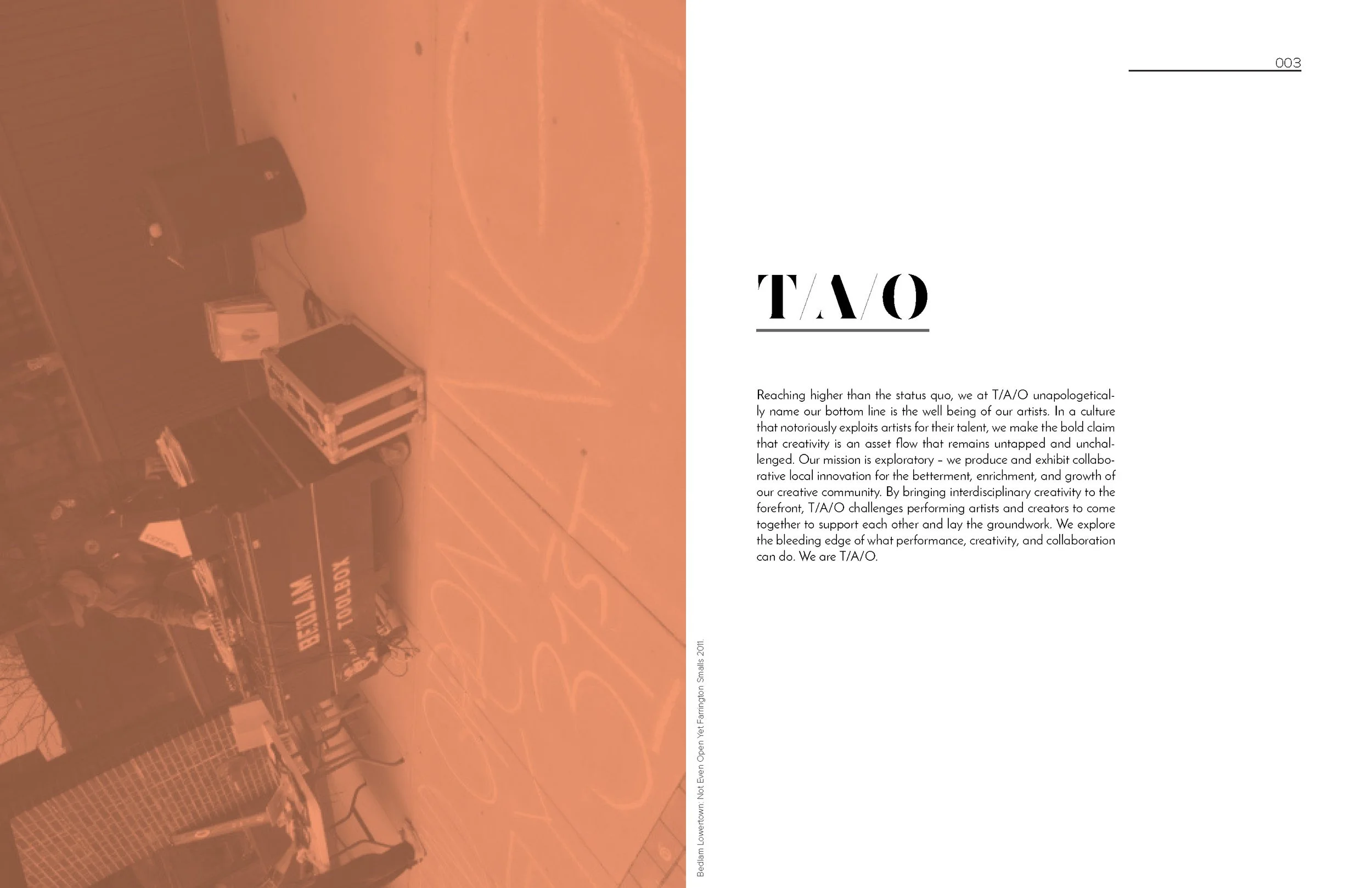
TAO Collective - Systems & Business Model Strategy
A community proposal seeking to monetize and incentivize membership for social and monetary support for fine artists. This proposal examines alternative business models using systems thinking to analyze financial flow through the arts and conceptualize a new regenerative and stable way to secure funding for the arts.
-
![]()
TDNDY - Human-Centered Social Sustainability Research
Design research proposal for a non-profit seeking to create new avenues of support and community-building for survivors of sexual assault. This case study uses design-thinking to uncover ways to look at the human-centered issues, such as persona, body storming, and empathy mapping, and culminates with life cycle analysis to ensure products proposed align with sustainable development goals.
-
![]()
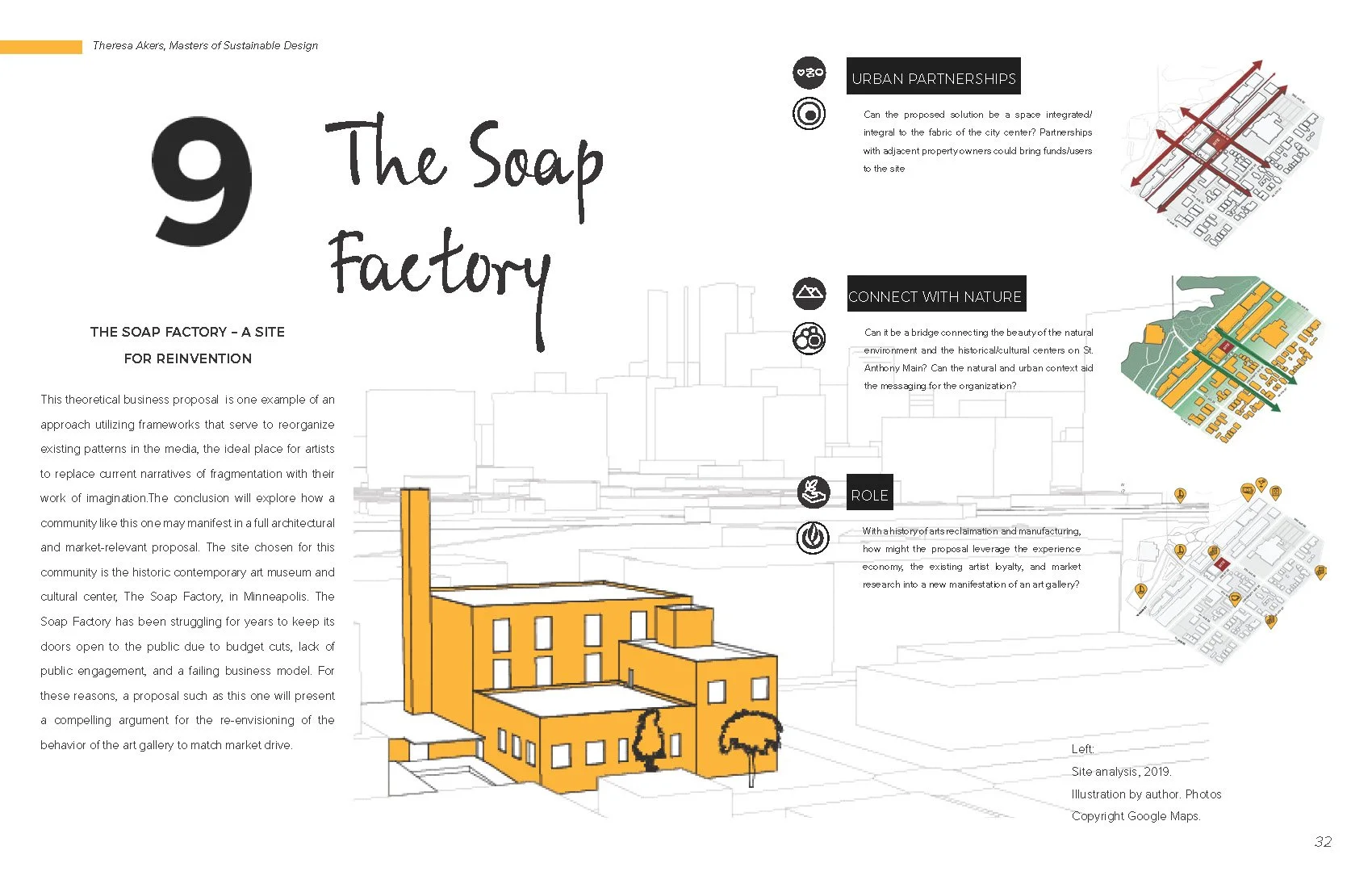
The Soap Factory - A Creative Climate Hub
An excerpt of my in-depth analysis on creative business models and how the right business model can be used to accelerate climate-positive communication through the creative industry. I applied sustainable design frameworks to inform a design strategy for business development of a new organization supporting creative innovation, using the insights gained during research.